Peter Gordon’s social ostracism
The Power of the Dog (Thomas Savage Edition)Peter Gordon’s social ostracism grows from the meeting of physical vulnerability, family stigma, and a school culture that marks difference for ridicule. His response is not simply withdrawal: as classmates target him and his father, Peter learns to watch the people around him, to distinguish their advantages, and to resist them on terms of his own choosing.
Identity and Background
Peter’s isolation precedes the schoolyard. He suffers through childhood diseases as well as recurring chills and fevers that sap his strength. His arms and legs are described as extremely thin, and his father, Johnny Gordon, worries that others may judge his own abilities by his son’s constant illnesses. The narrative thus places Peter’s bodily vulnerability within a family already alert to public judgment, though it does not suggest that illness alone explains his exclusion.
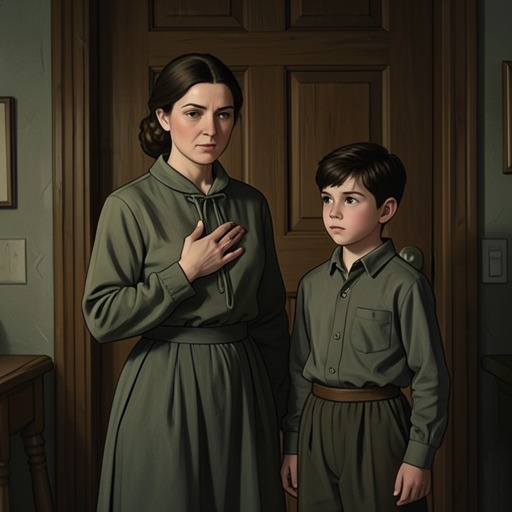
As a child, Peter does not complain or demand more from his parents. He accepts the toys they offer and looks at life with an expressionless, observant manner that leaves uncertain how much he sees or allows himself to show. He prefers books and solitude to ballgames. Sunlight is uncomfortable for him: before going outside, he pauses, squints, and shields his eyes. These habits distinguish him from the physical and social expectations surrounding ordinary childhood activities, while also establishing observation and inwardness as central features of his character.
School and Public Humiliation
At school, the difference that has shaped Peter’s private life becomes a basis for collective bullying. His classmates haze and taunt him, using a gendered insult to cast him as unmanly. The narrator compares the school’s treatment of an outsider to the way poultry turn on an injured or unusual member of their group. The comparison makes the cruelty seem less like a single quarrel than a social pattern in which a group identifies and punishes whoever falls outside its norm.
Peter’s response changes when the boys insult Johnny as a drunk. He turns toward them and tries to confront them physically, but they evade him and form a circle around him. Their shared amusement makes the episode a performance for the group: Peter is surrounded not by one adversary but by classmates who reinforce one another. The attack on his father reaches a boundary that mockery of Peter himself had not crossed, revealing how strongly he identifies with the Gordon family even as he knows that others regard it with contempt.
The scene also gives Peter an unusually broad view of the social order among his tormentors. He notices Fred, who rides to school with a fifty-dollar saddle; Dick, the bartender’s son, whose classroom marks nearly equal Peter’s; and Larry, who already weighs nearly two hundred pounds and often grins without saying much. These sharply differing details show Peter assessing not only who is present but what advantages, habits, and forms of power each boy possesses. His attention turns the circle around him into an object of study.
Judgment, Resistance, and Family Loyalty
After standing among the boys rather than continuing to lunge at them, Peter recognizes that he must oppose them on his own terms. The decision does not amount to reconciliation or acceptance. Instead, the experience produces what the narrative presents as a cold, impersonal hatred directed beyond his immediate attackers toward people who are normal, rich, envied, and secure. Its reach is tied to the private image Peter has of the Gordons: those who insult his family also threaten something he is determined to protect.
The episode traces a progression from being singled out to interpreting the people who single him out. Peter does not answer the school’s social code by demonstrating that he can match its preferred physical strength or easy confidence. He studies the boys and arrives at a different kind of resistance. The account presents this as a hardening of judgment, not as a simple victory: he recognizes the group’s advantages while also deciding not to accept its authority over the terms on which he will meet it.
Persistence and Narrative Significance
The school’s attacks recur in changing forms. On a later occasion, Peter remains unmoved when classmates say that Johnny talks to a sex worker. That reaction contrasts with his earlier attempt to confront them when they called his father a drunk. The evidence does not explain the change as forgiveness or indifference; it shows that Peter no longer responds to every insult with the same visible movement. His stillness makes the continuing harassment clear while marking a shift in how he bears it.
Peter’s ostracism therefore encompasses both exposure and adaptation. His illness, preference for solitude, and discomfort in sunlight make him conspicuous before the school’s taunts give that difference a social label. The abuse then links Peter’s standing among his peers to Johnny’s reputation and to the family identity Peter defends. By emphasizing his attention to particular classmates and his decision to resist on his own terms, the narrative presents an outcast who is not merely the passive object of others’ judgments: he observes, evaluates, and forms a lasting judgment of the people who presume to define him.